2024 Tension | Santa Maria Maior Gallery, Lisbon
Tension: fragile balances
In the last 30 years, the relationship between Man and Nature has become increasingly tense and complex. If, on the one hand, we know more and have greater preparation; on the other hand, we pollute incomparably more and deplete more resources. The human being is effectively contradictory, and the tension between individual space and collective space is an enormous challenge to intelligence and resource management, as well as to common sense and respect for Nature and the Other, in their respective places and singularities.
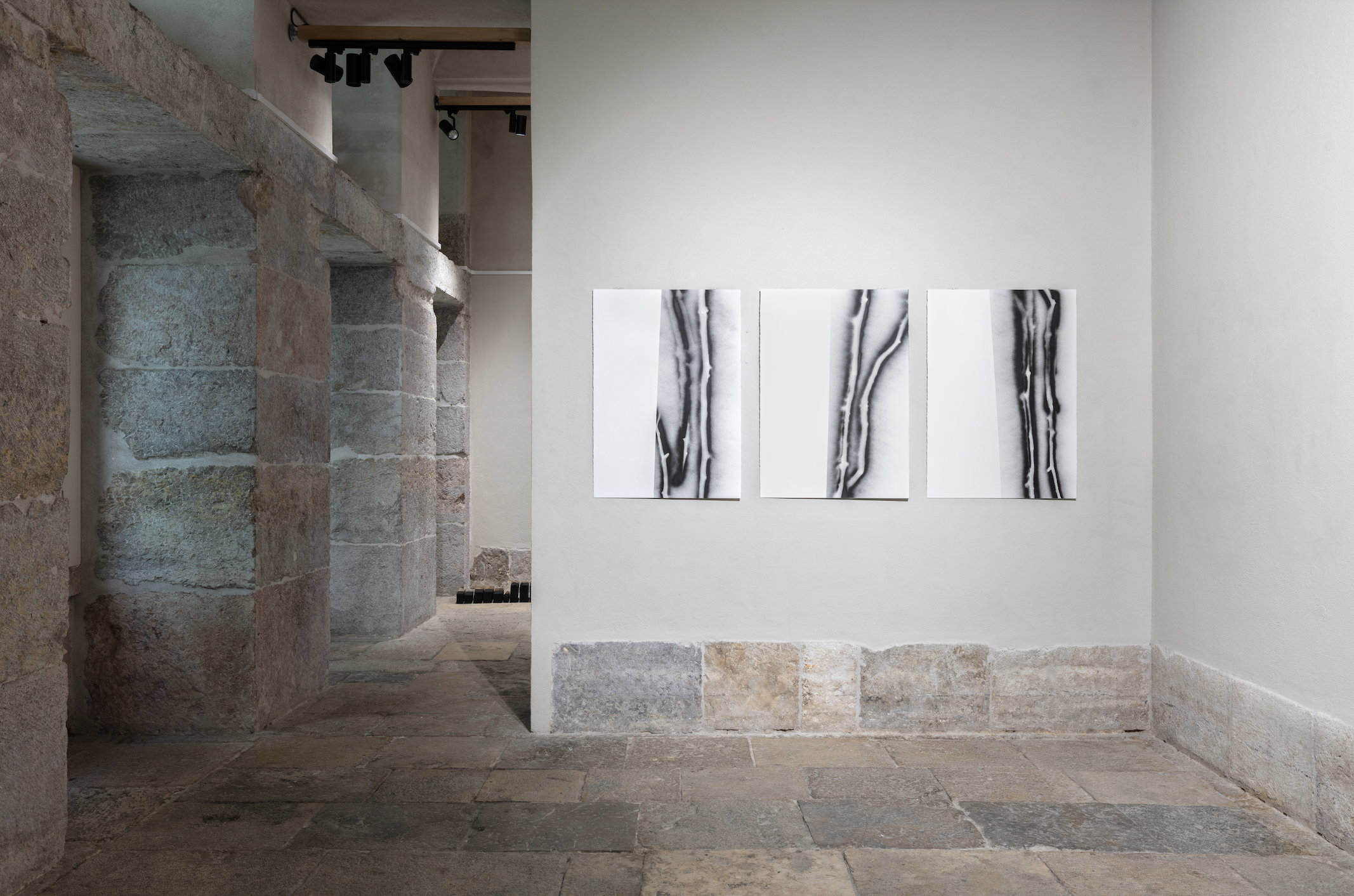
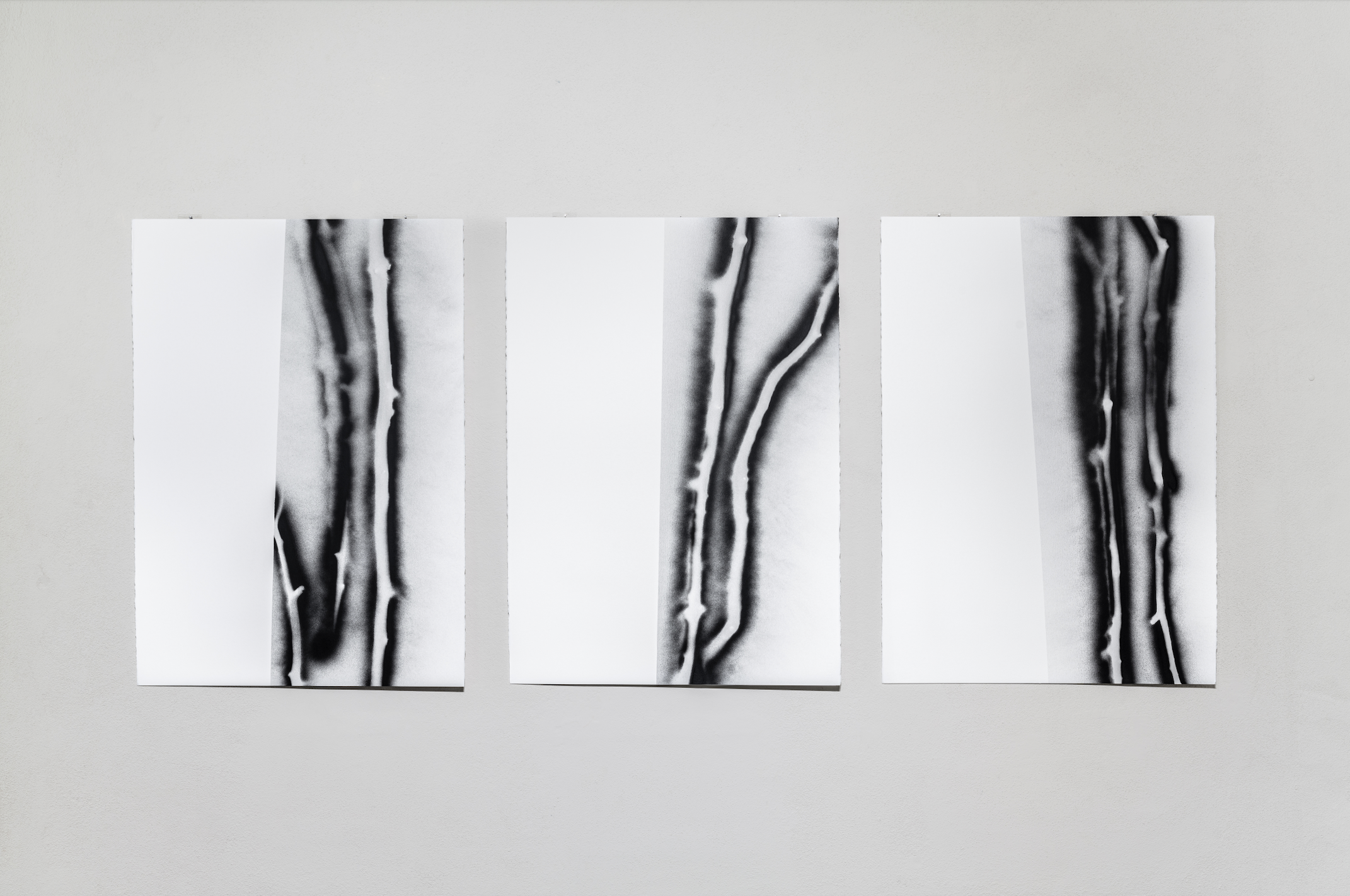
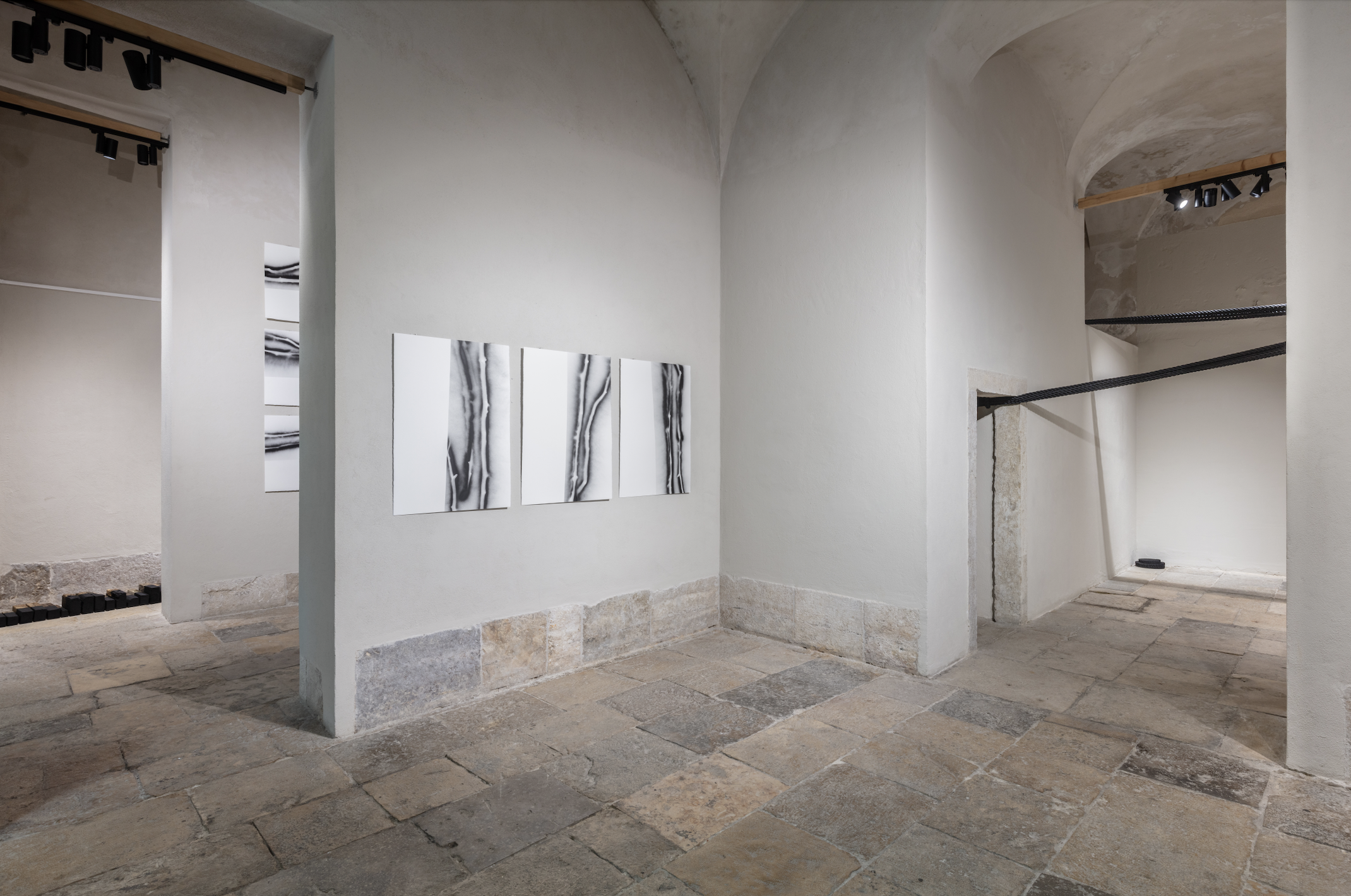
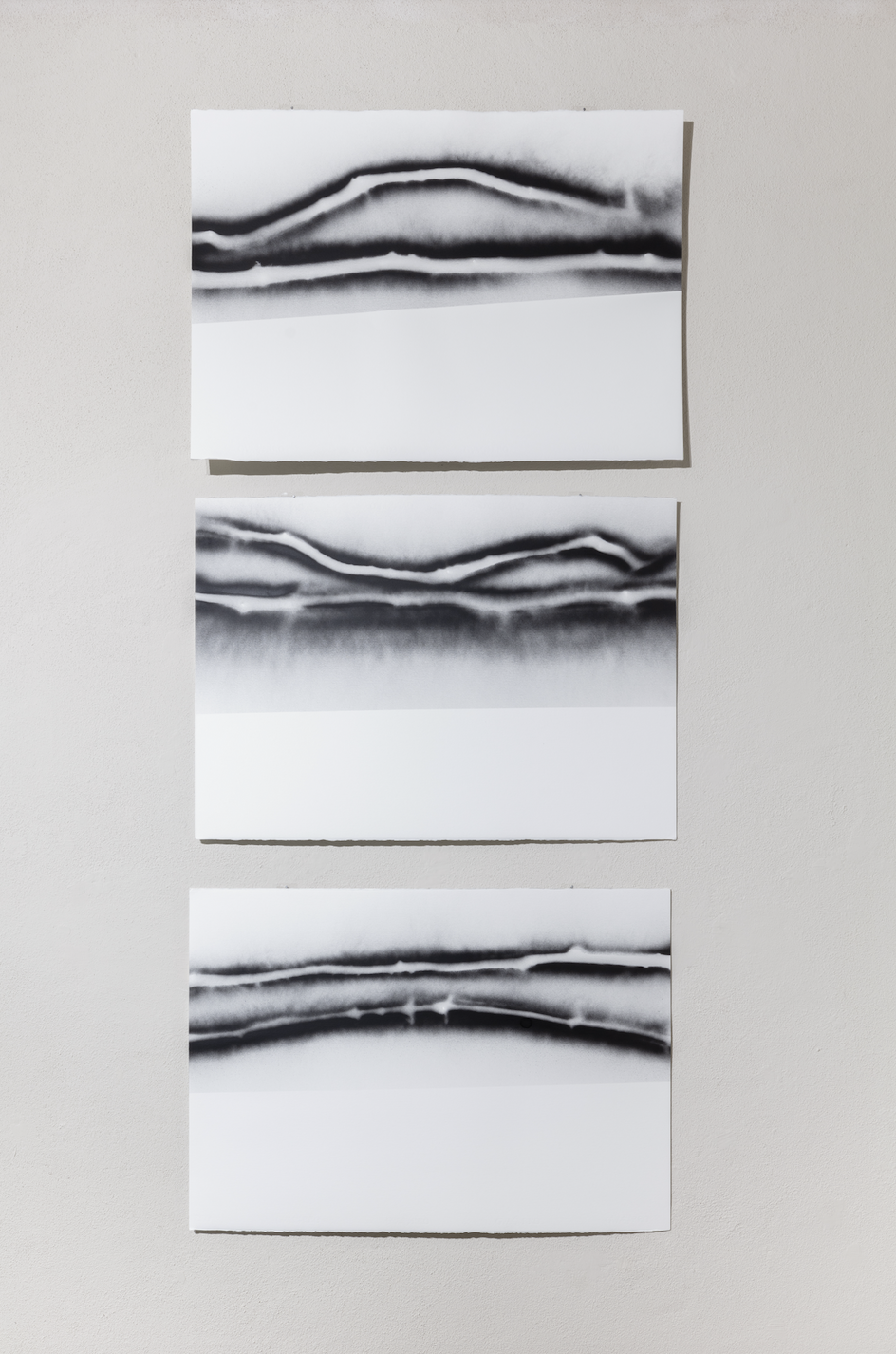
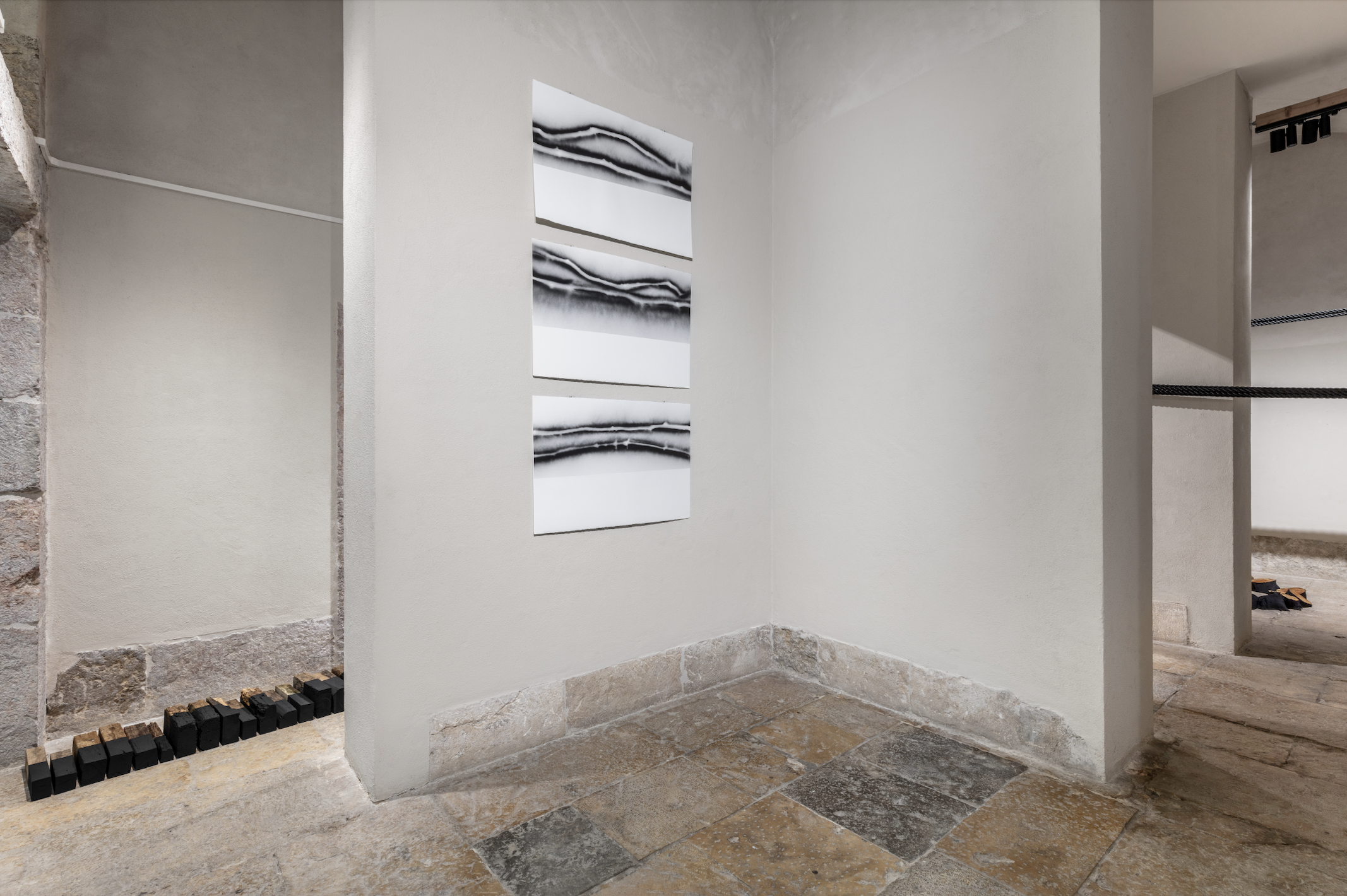
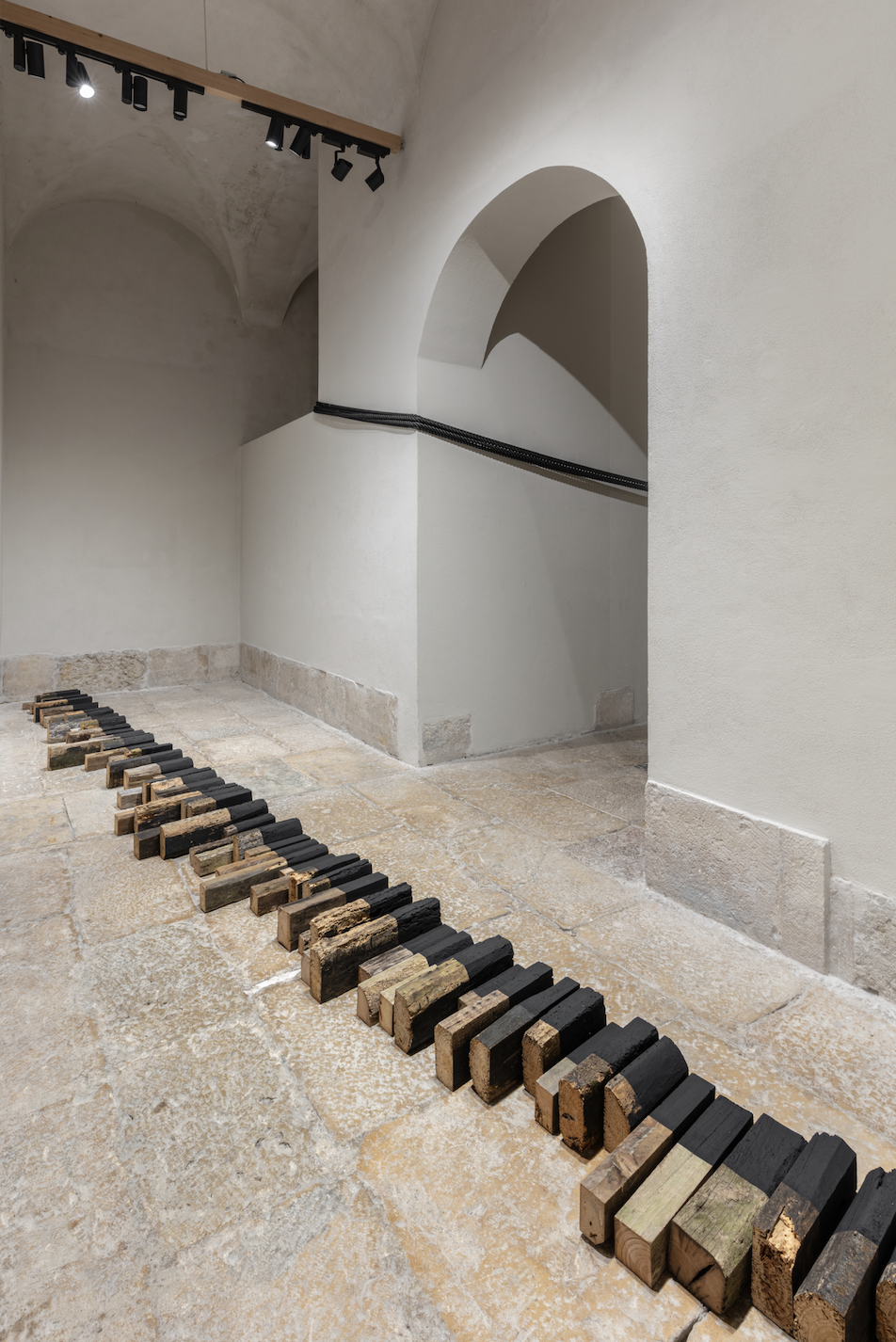
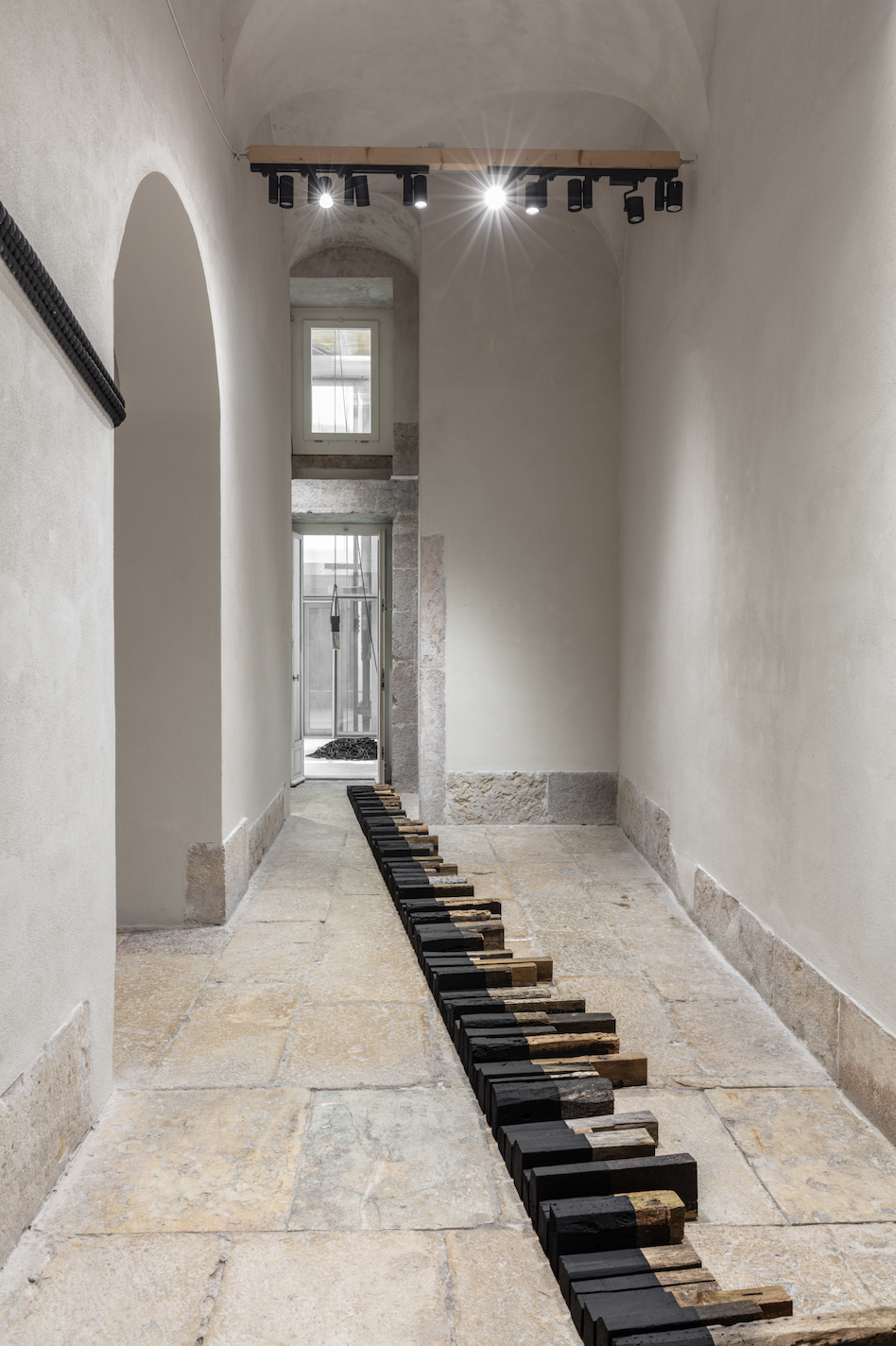
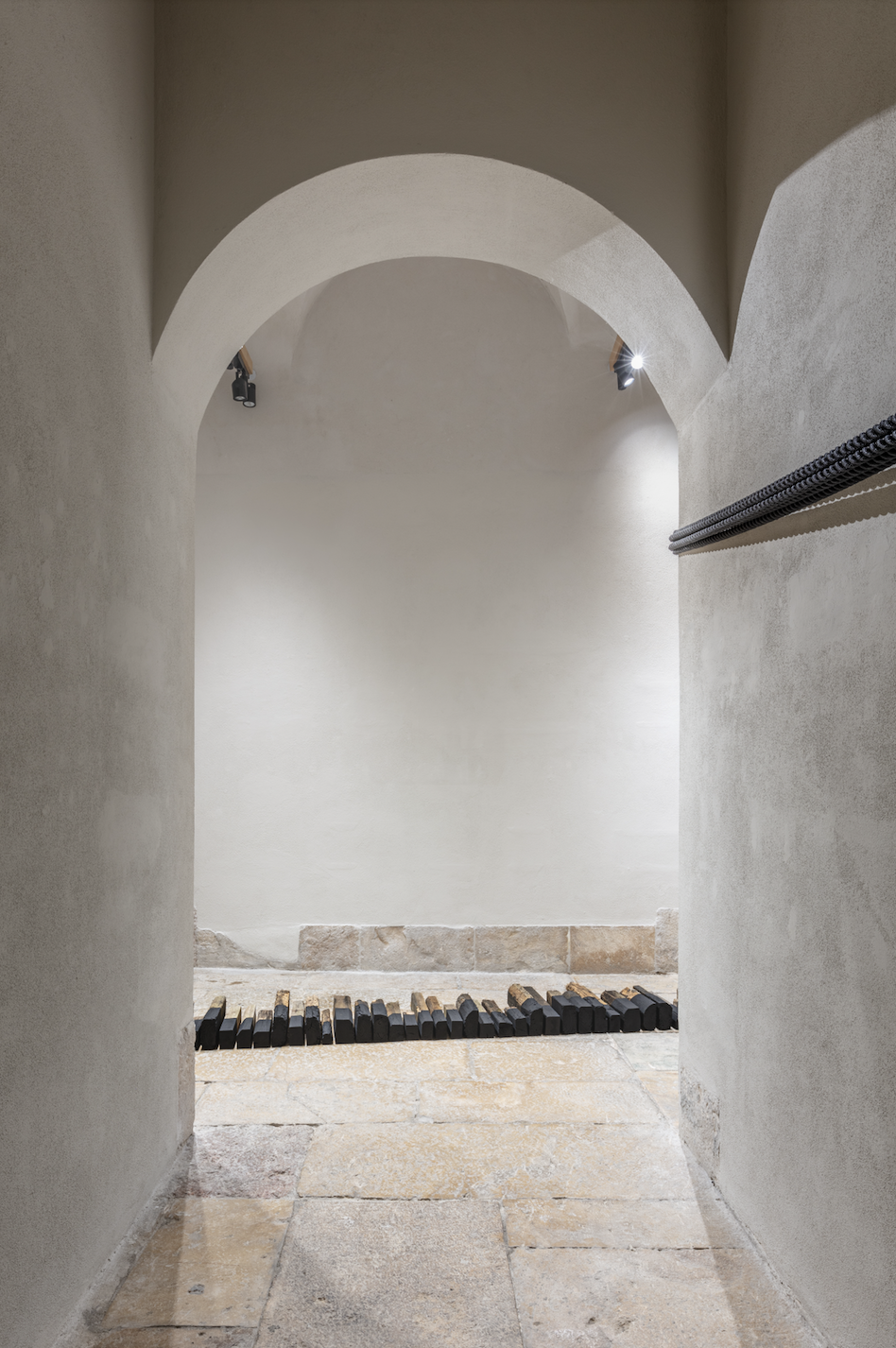
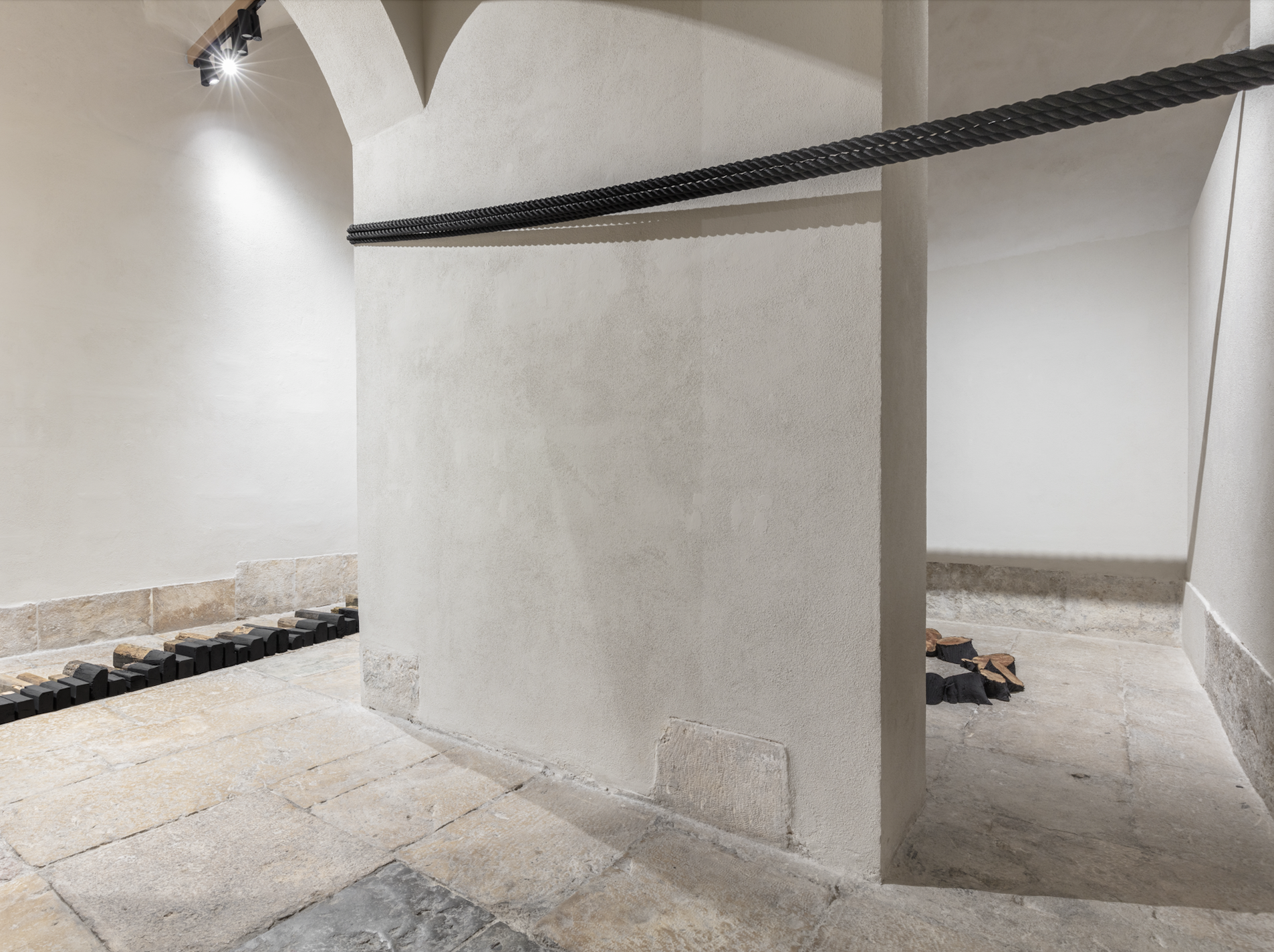
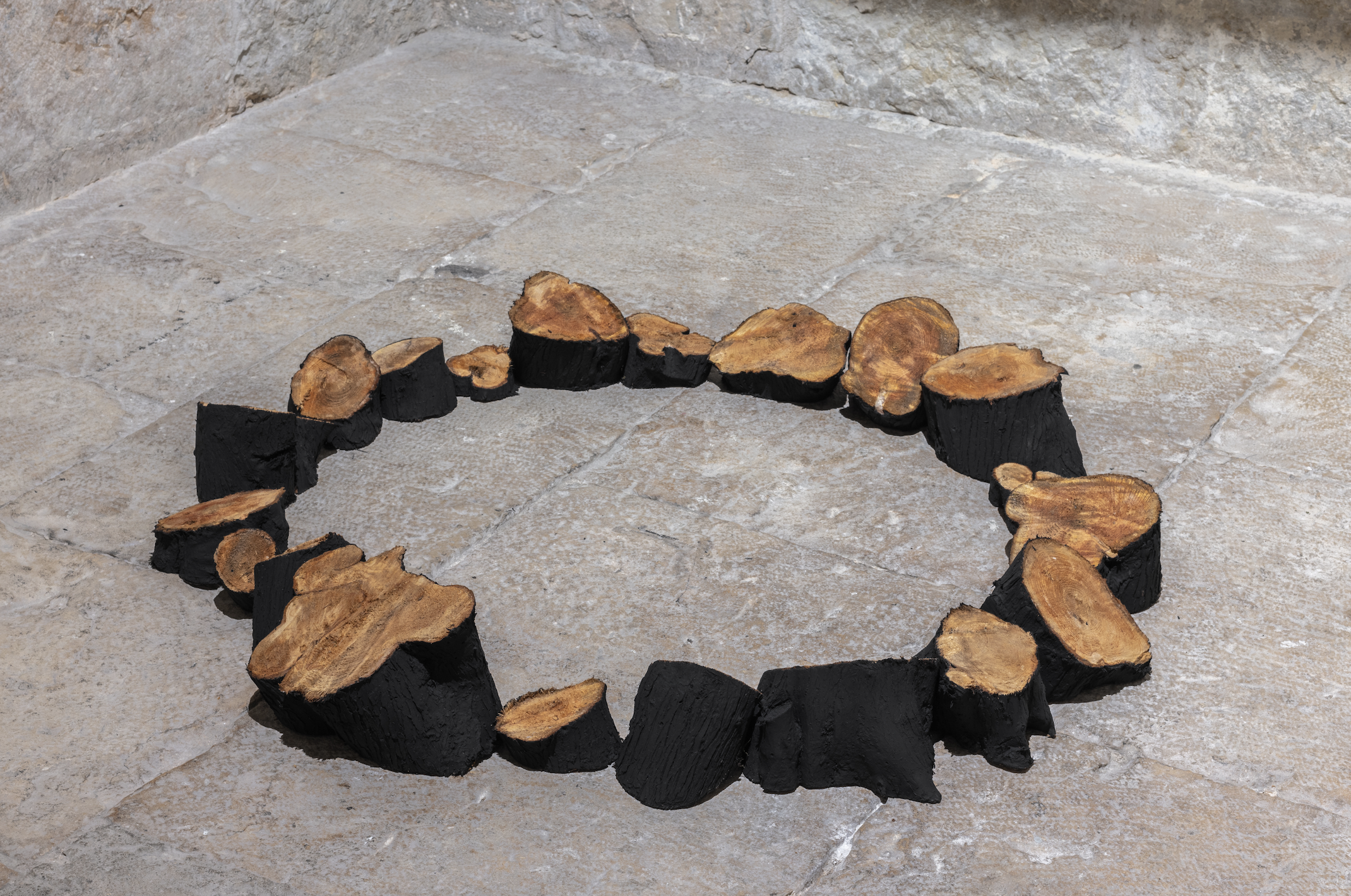
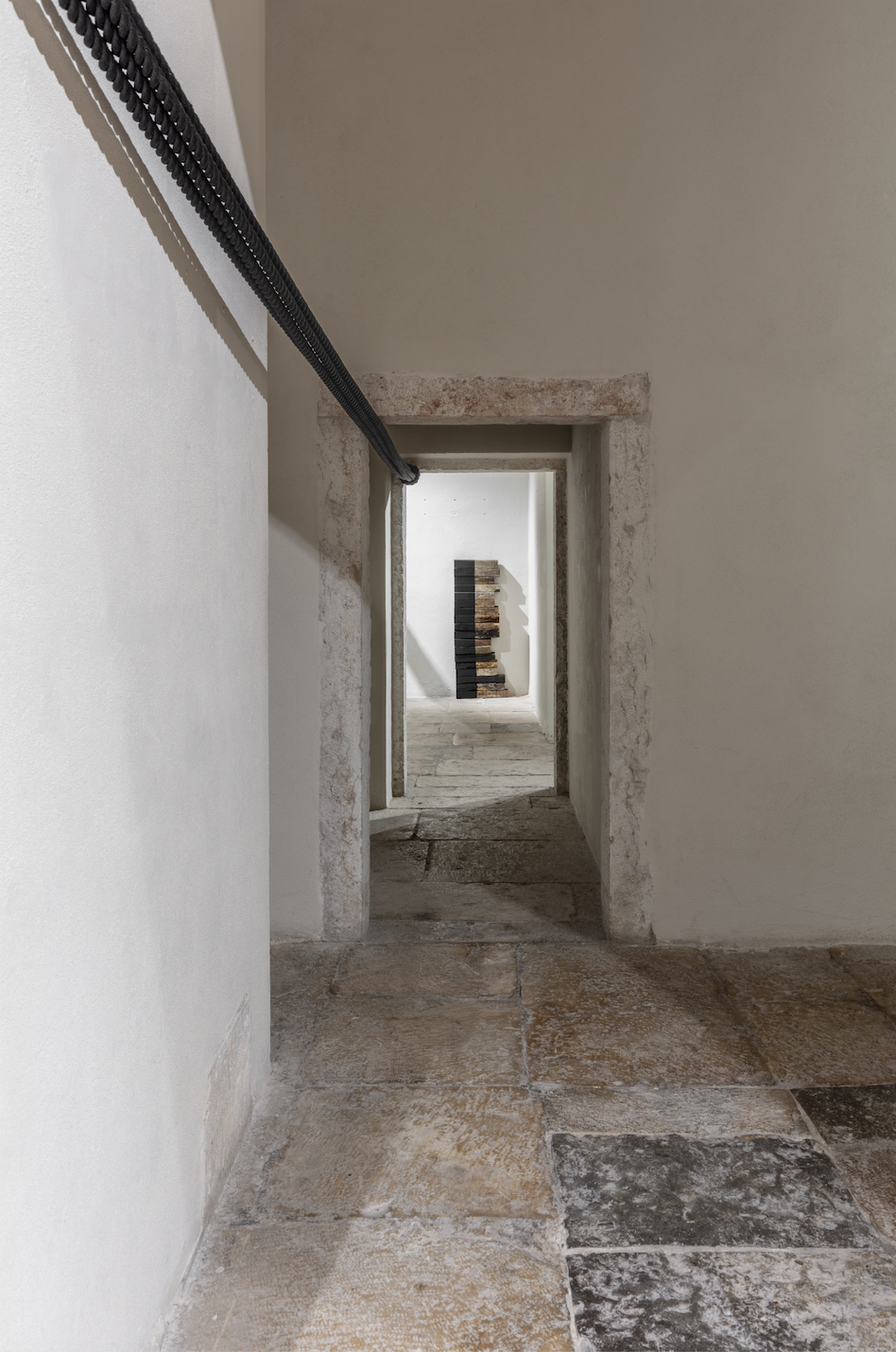
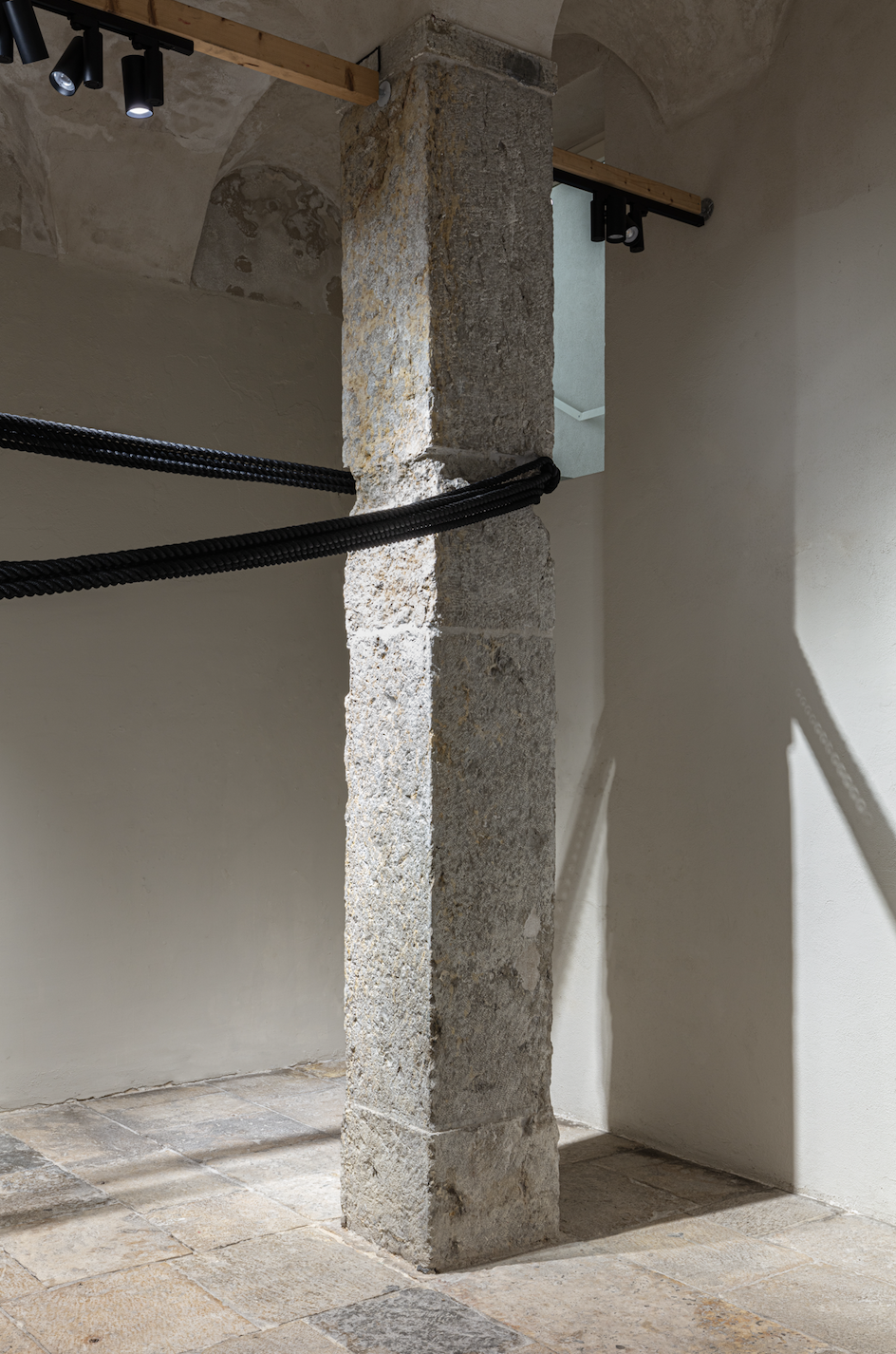
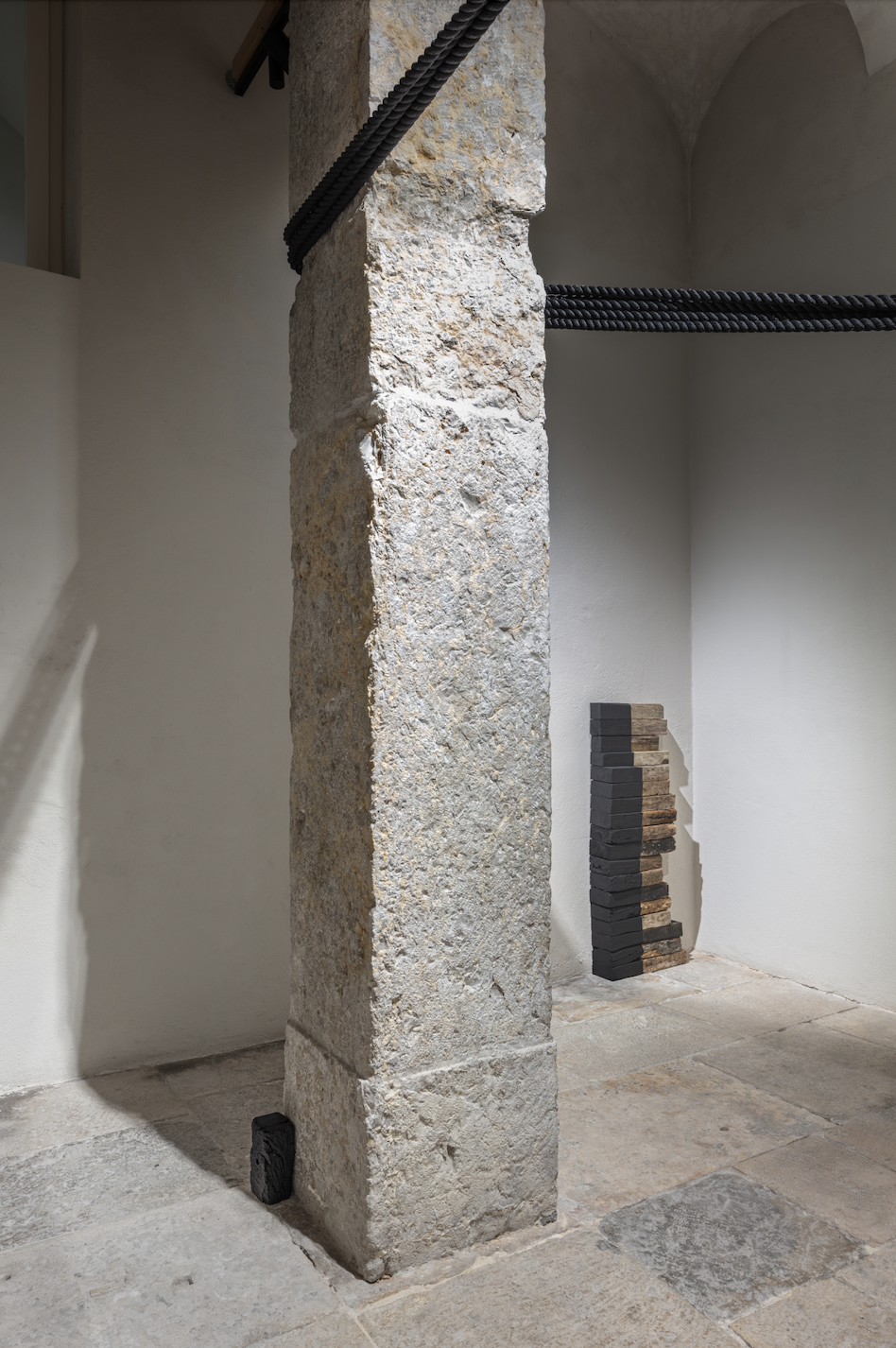
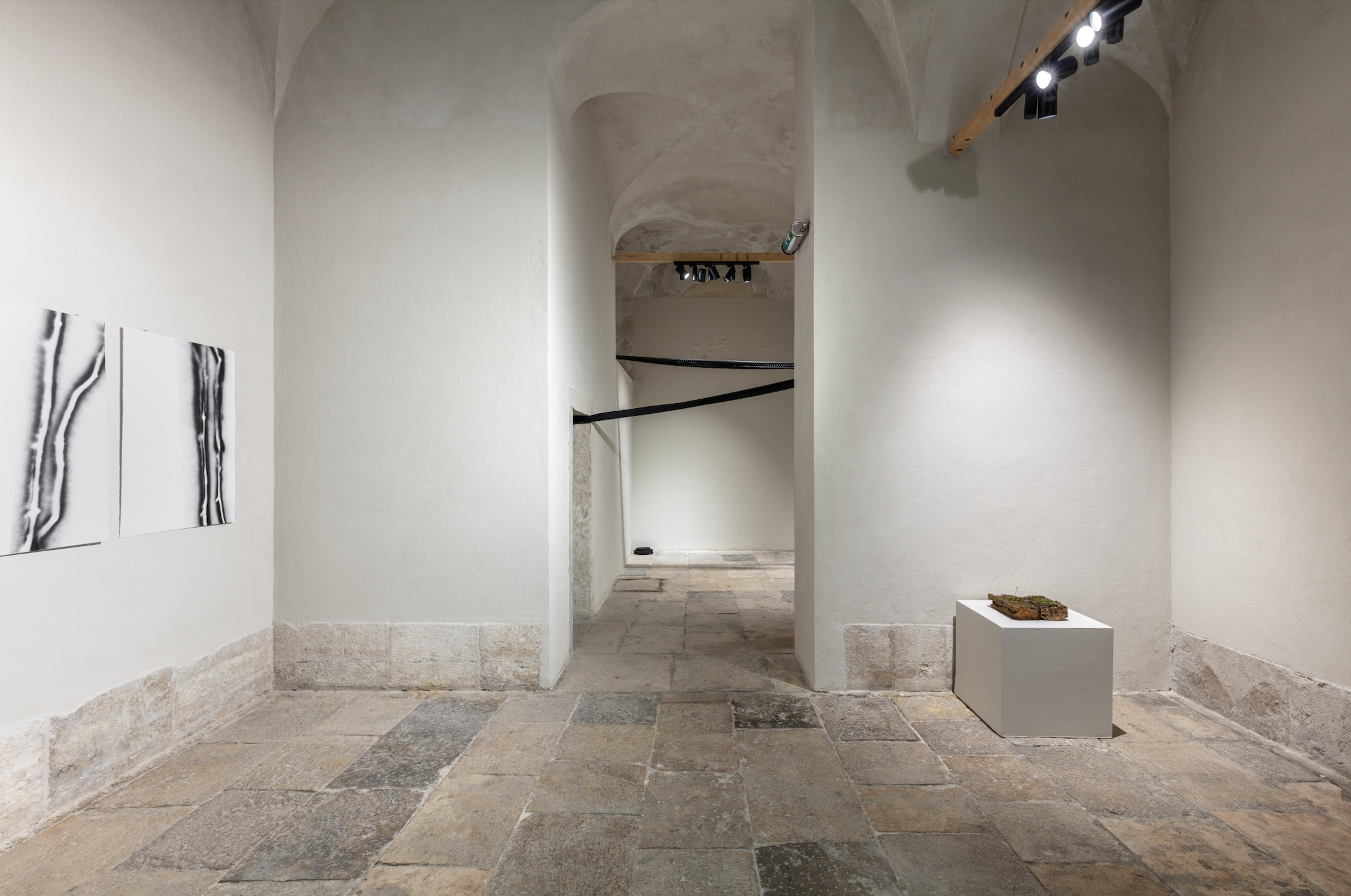
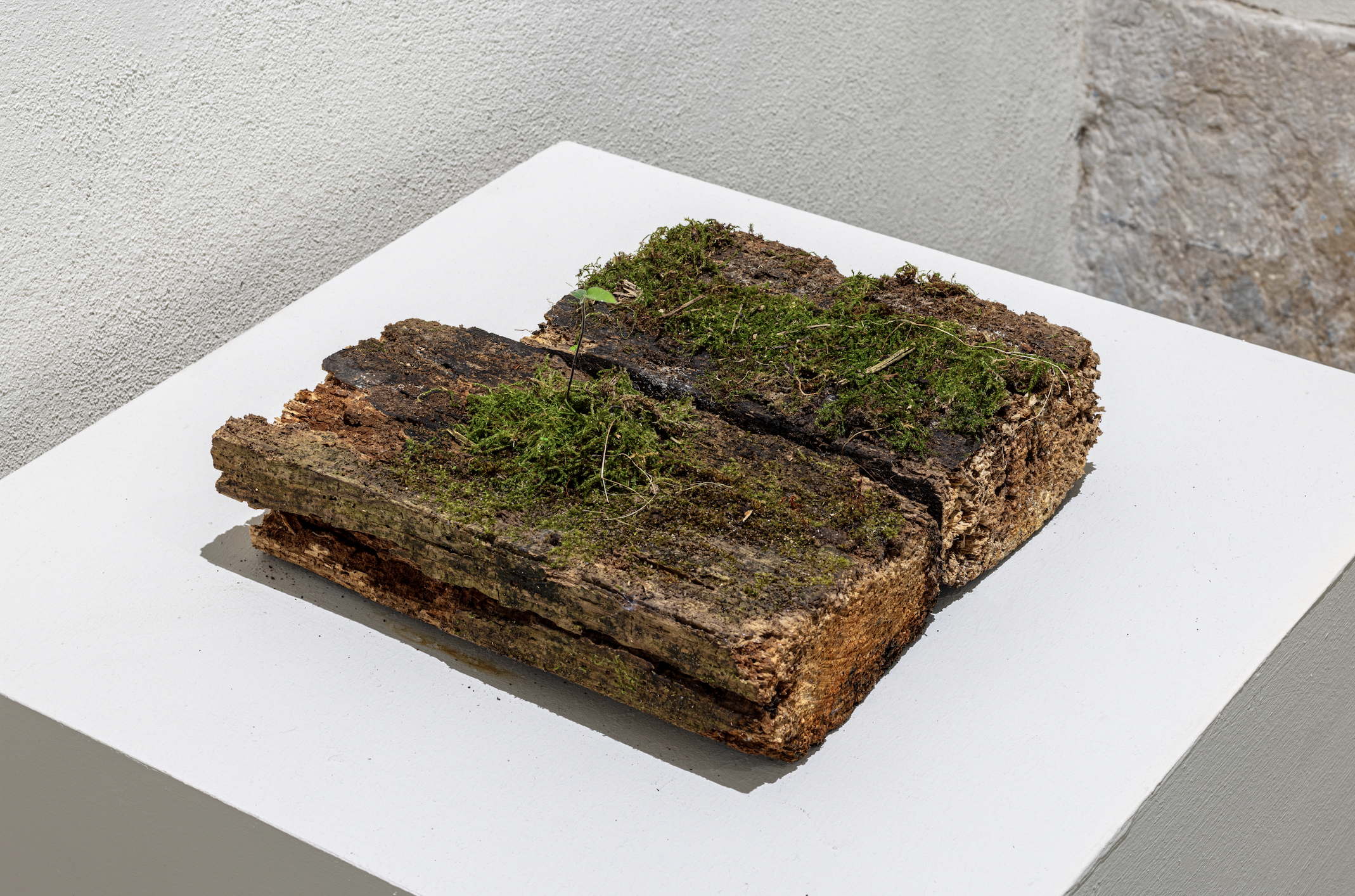
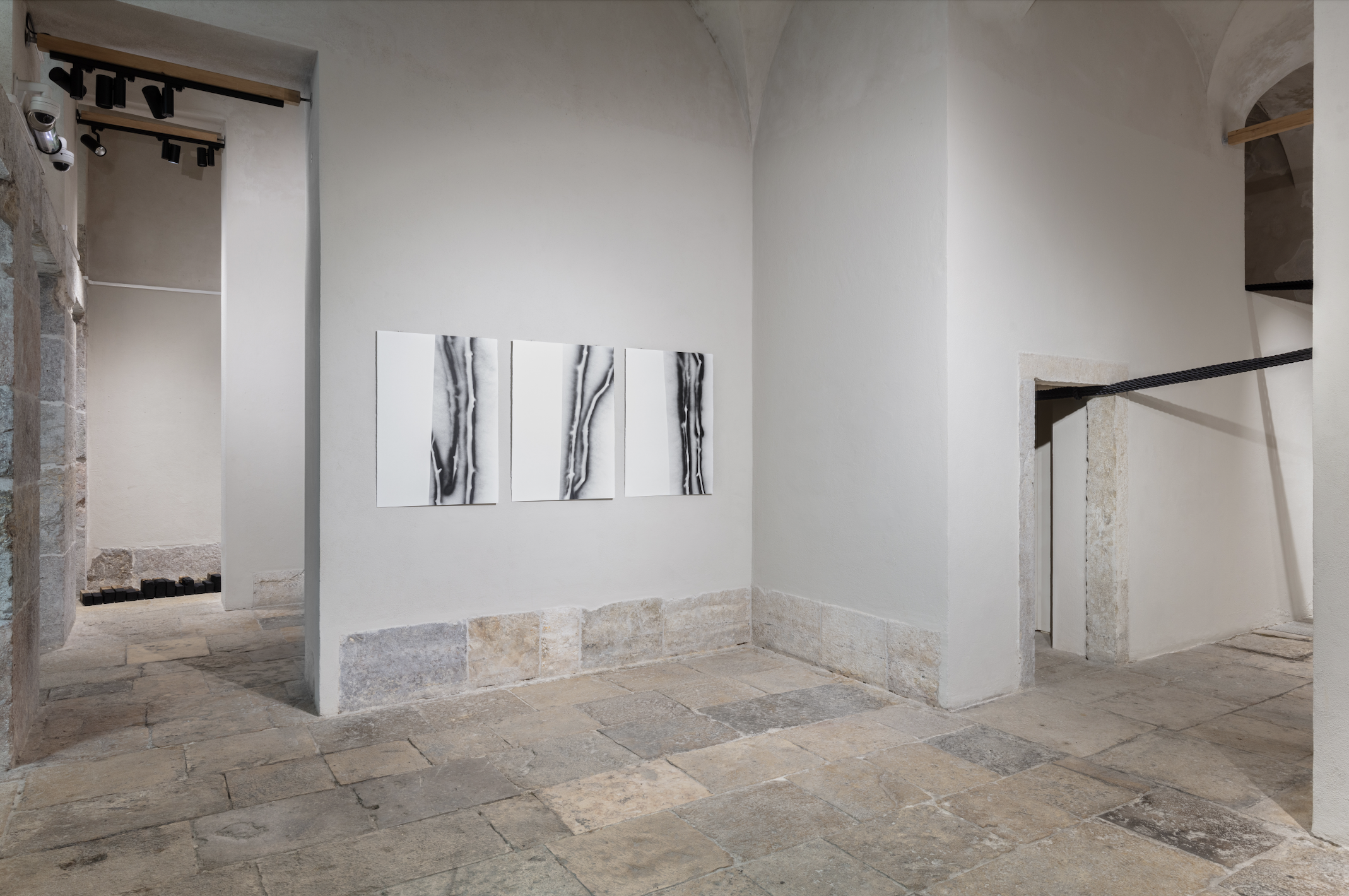
Tension is the title of this intervention by Tomaz Hipólito who, once again, invites the viewer to reflect on these challenging relationships by proposing polarising pieces that evoke these problems, specifically, wood and industrially produced objects, such as the polyester cables that punctuate the compositions and the gallery space itself. Marshall Berman, in his work All That Is Solid Melts into Air: The Experience of Modernity (1982), focused precisely on modernity in its permanent disintegration and (re)integration, extrapolating to the condition of the individual who is effectively part of a universe in which “all that is solid dissolves into air”. Consequently, we position ourselves within the ideas of shattering, dissolution, and a desirable reintegration and balance. Perhaps in a sort of utopia capable of making the present more liveable.
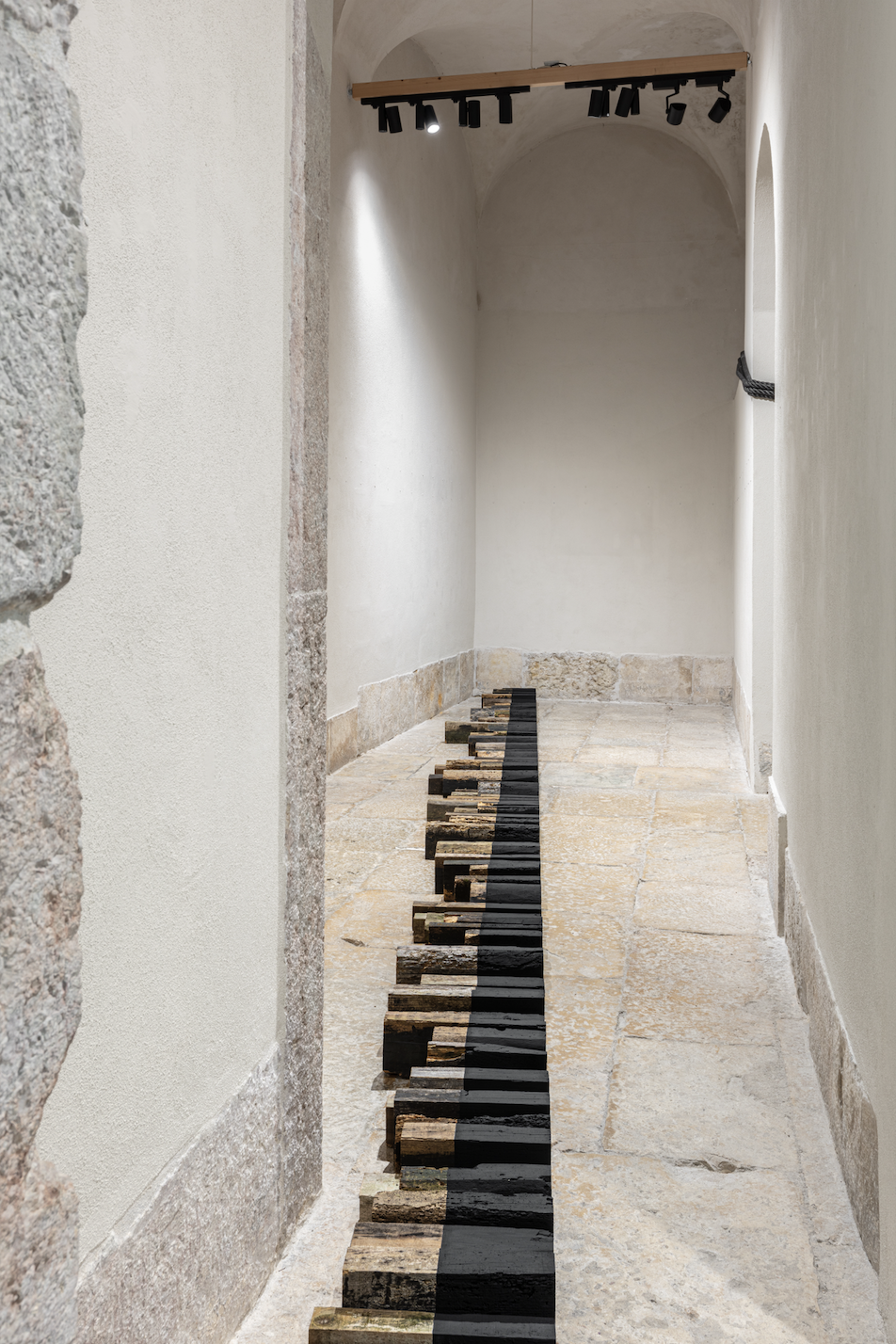
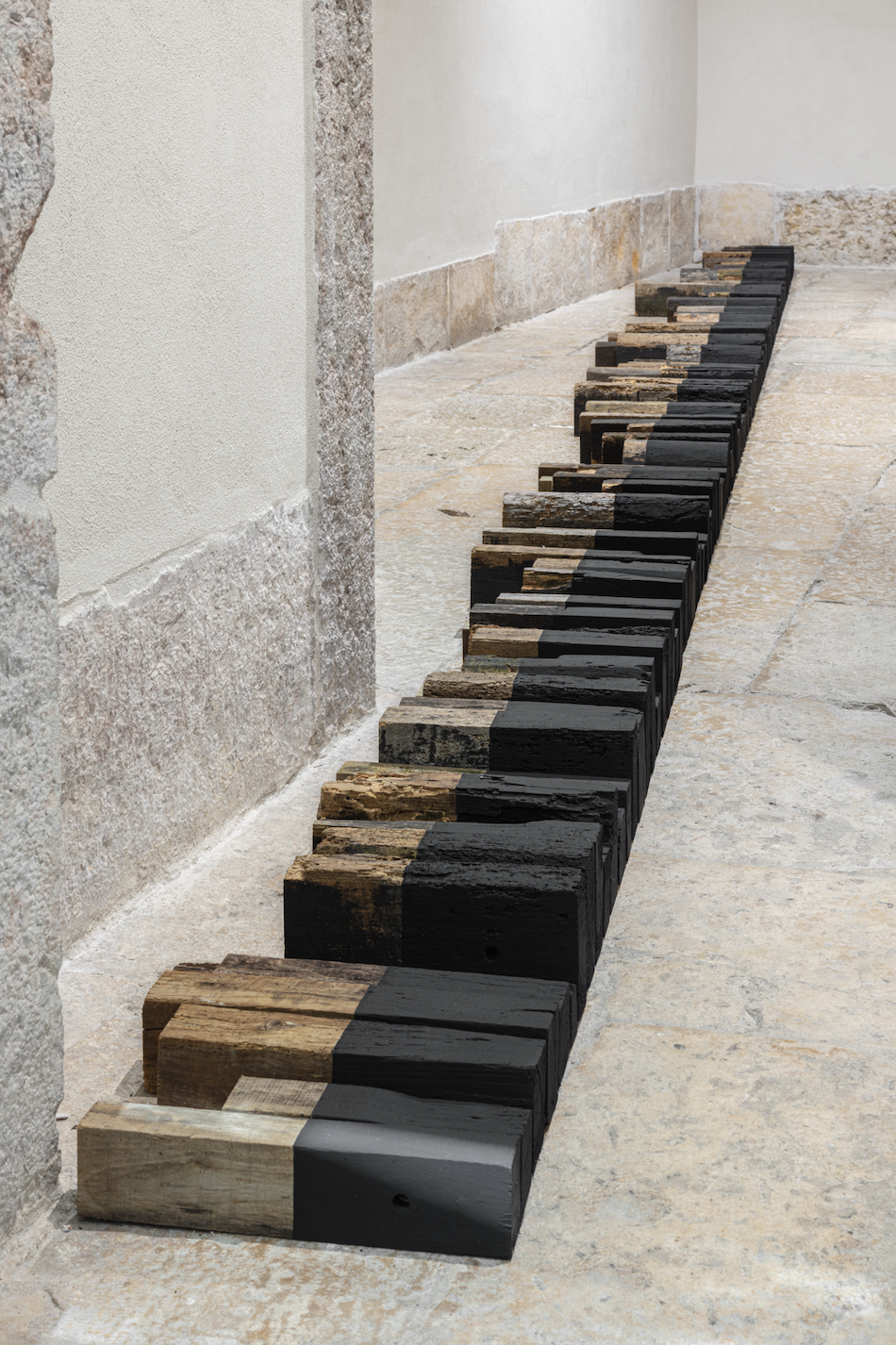
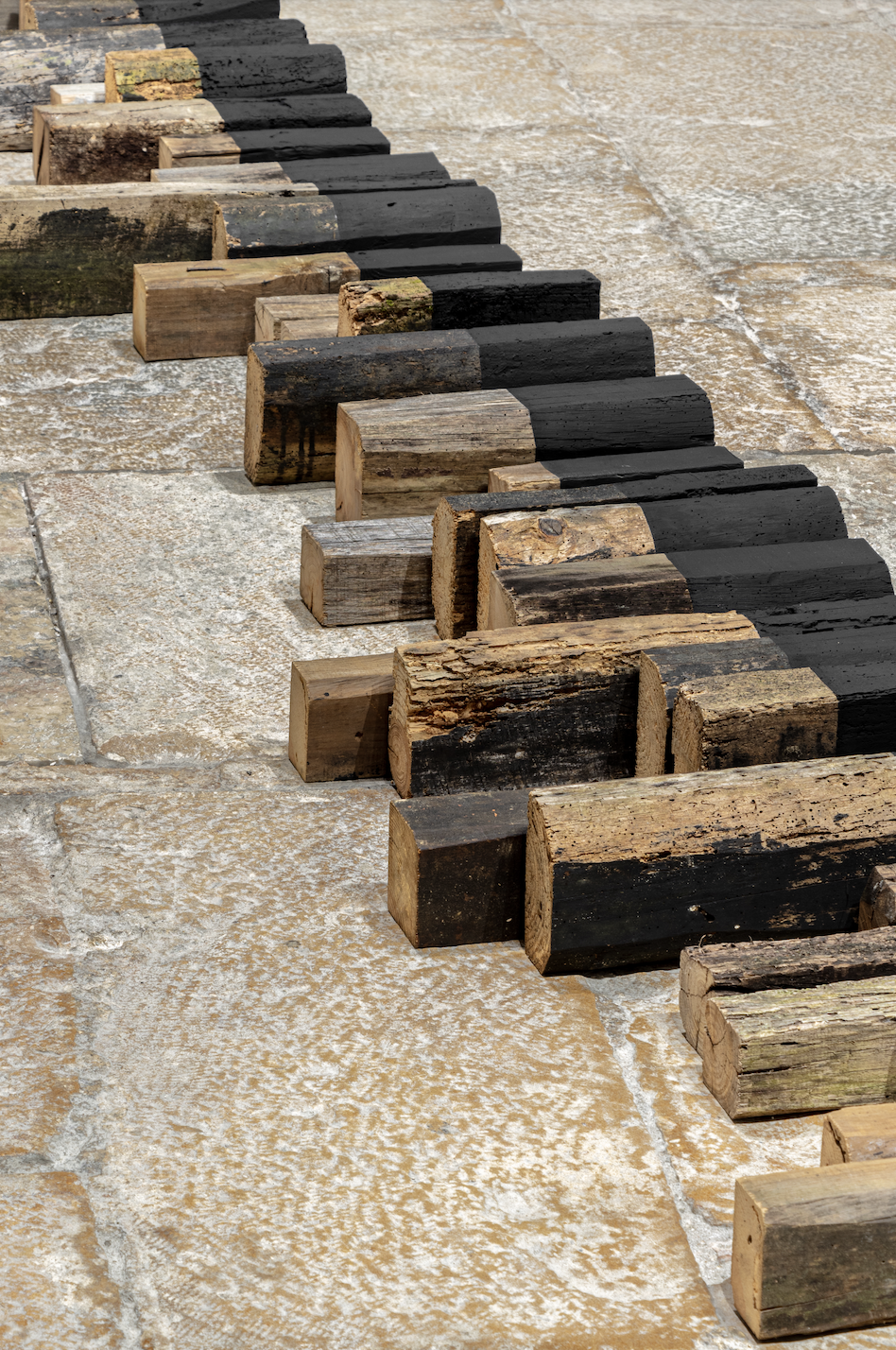
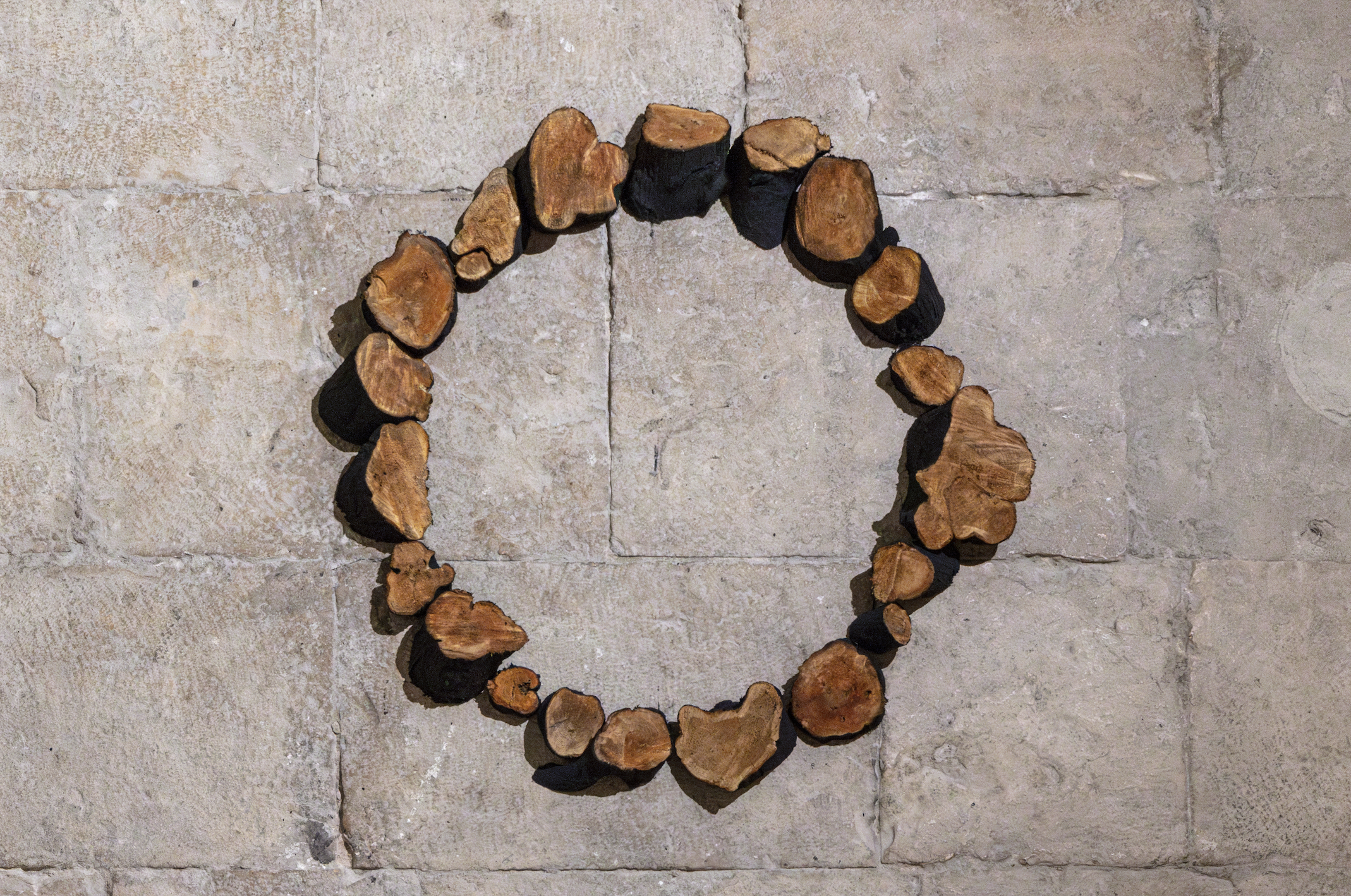
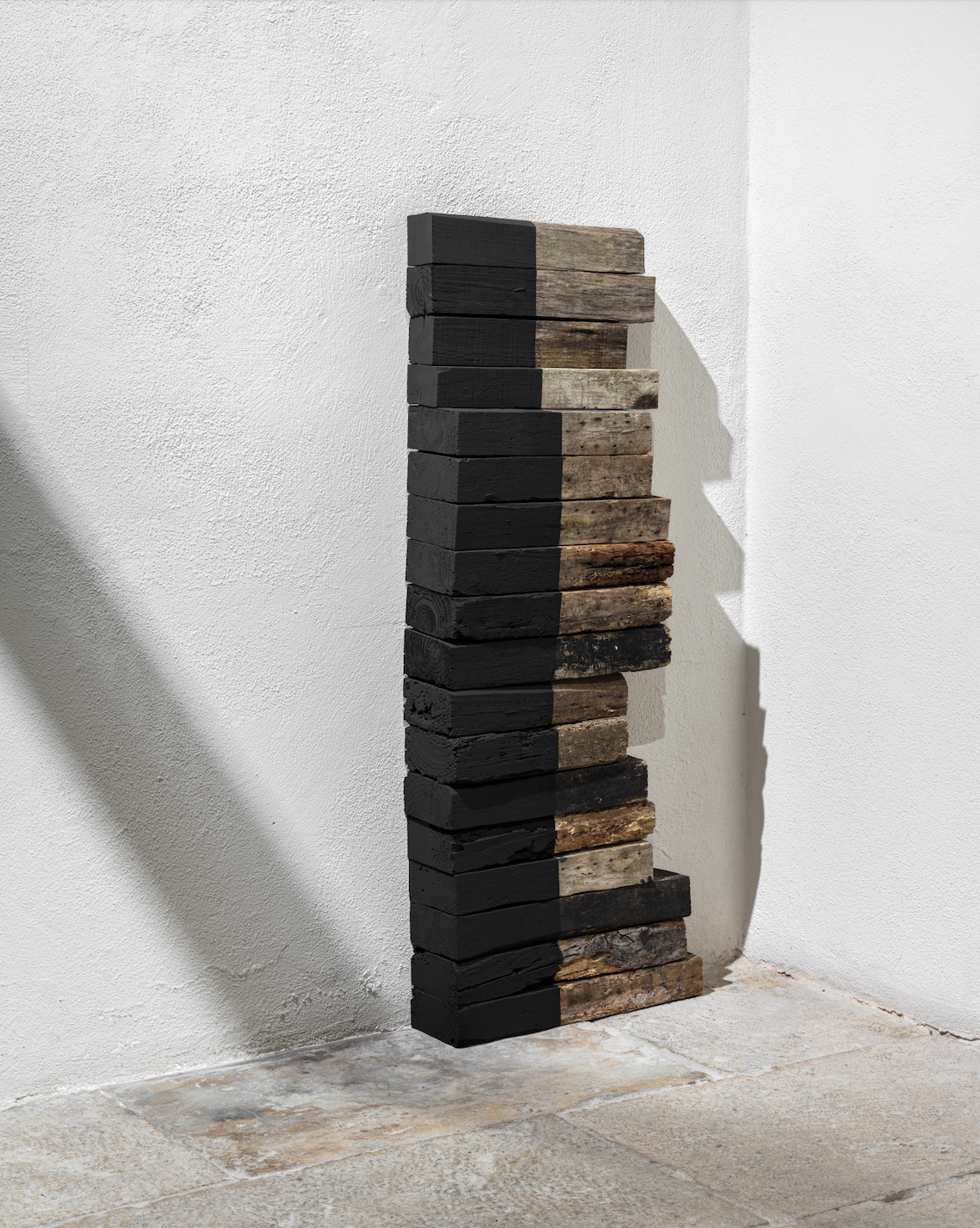
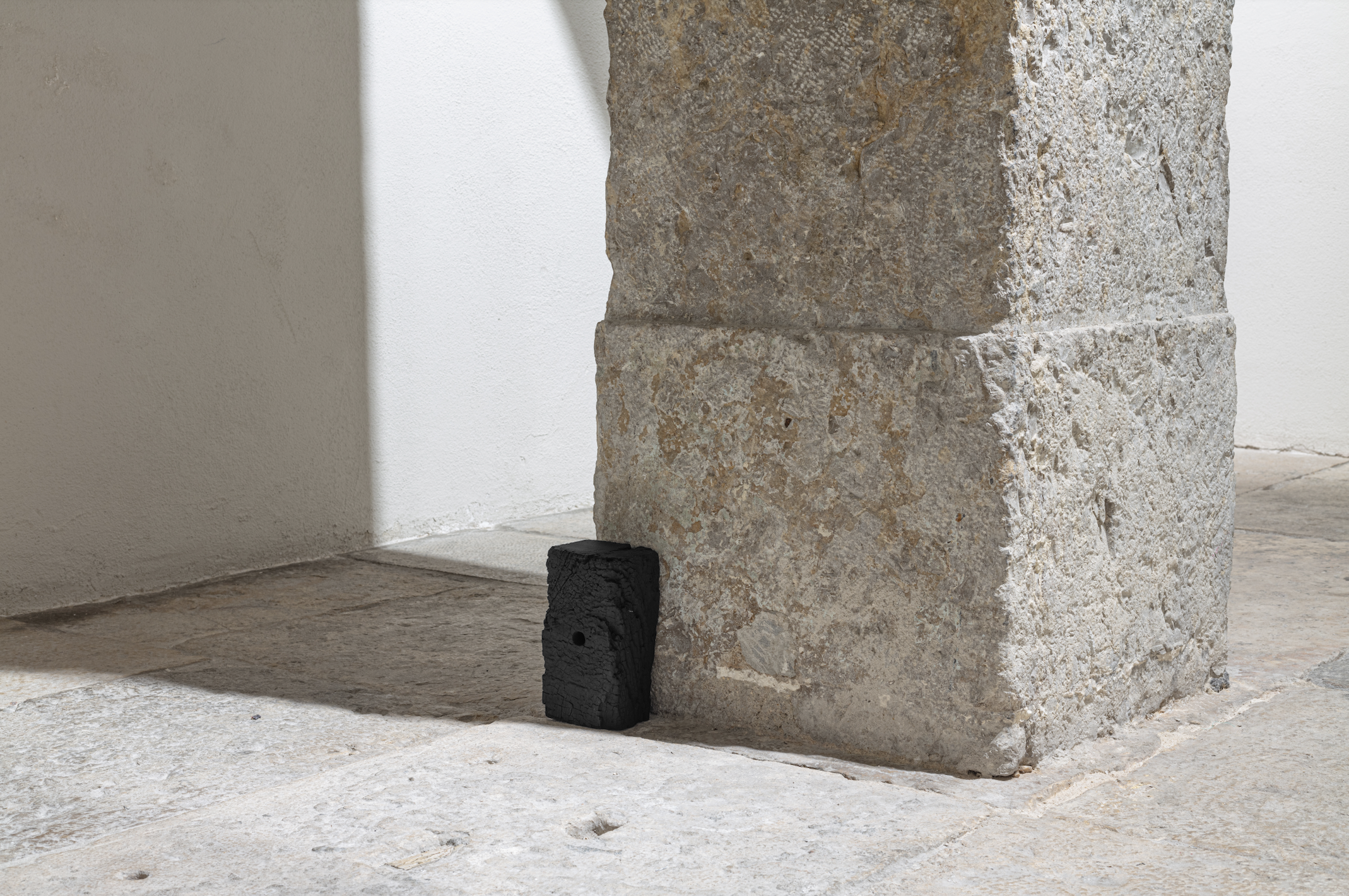
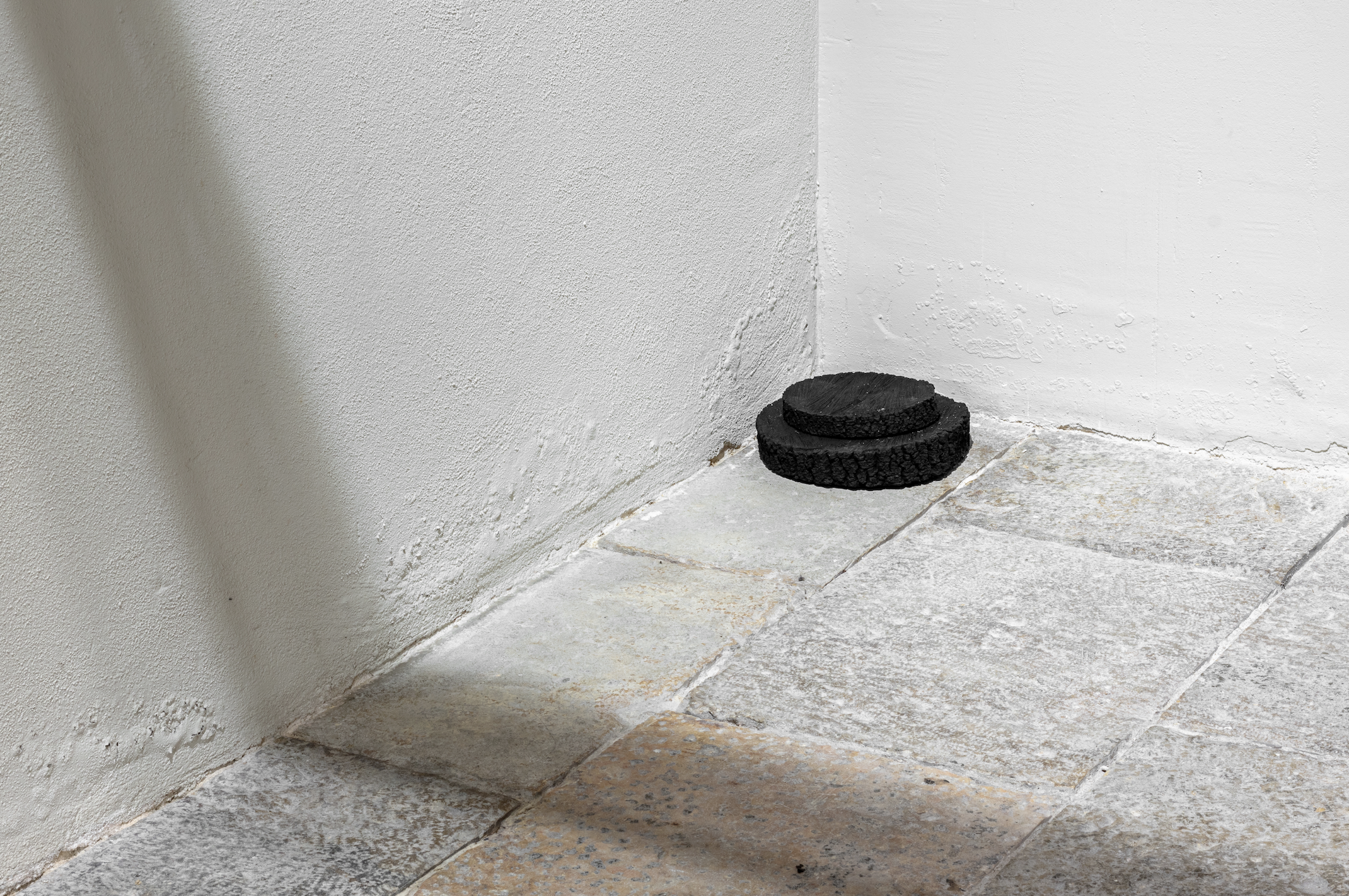
The black cables connect the entire space, strip it of its temperature, measure it, and finally, pierce the pieces of wood partially painted in black. A wooden mandala also stands out, with the exterior of its pieces colored in black. Mandala means “circle” and it is precisely a geometrising and metaphorical representation of the relationship between Man and the Cosmos. The design also flows through tree branches that have left their abandoned shapes in the space. Perhaps, in some sort of dystopian oblivion. In these aspects, we find an organicity that gives coherence to the presented body of work. And, recalling the words of Claes Oldenburg in 1961, “I am for an art that is political-erotic-mystical, that does something other than sit its ass in a museum. (…) I am for an art that tells of the day’s weather, or where this or that street is”, art awakens consciences and contributes, in its own way, to urgent and necessary changes. Before it is too late.
Isabel Nogueira
text related